Hey guys, let’s cut to the chase—if you’re here, you’ve probably been staring at a dead fridge mid-summer, or your work-from-home router just died because the grid went down for the third time this month, and you’re finally thinking: “Maybe a diesel generator isn’t just a luxury for fancy farms or hospitals.” As someone who’s sold household diesel gen sets for years, I can’t tell you how many times people come to me and go, “Uh… how much power do I even need?” No shame—most of us don’t wake up knowing the difference between “starting watts” and “running watts” beyond the fact that both sound like stuff that makes things work. Today, I’m gonna walk you through this step by step, no confusing jargon, no sales pitch fluff, just real stuff that’ll keep you from buying a gen set that’s too tiny (so it dies mid-laundry) or way too big (and wastes money on fuel you’ll never use). Household Diesel Generator

First things first: stop guessing. This isn’t like grabbing a water bottle that “feels right”—power here is measured in watts, and getting that number wrong is the #1 mistake people make. There are two key terms you need to memorize, and they’re not as scary as they sound: running watts (sometimes called “rated watts”) is the steady power an appliance uses while it’s working. That’s your fridge running, your TV playing, your laptop charging—no spikes, just consistent use. Starting watts (aka “peak watts”) is the extra jolt an appliance needs to kick on. Think about your air conditioner: when you hit “on,” it doesn’t just start humming—it draws 2-3 times its normal power for a second to get the compressor moving. If your gen set can’t handle that peak, it’ll either shut off right when you need it, or just die. That’s the last thing you want when your whole house is relying on it.
Now, let’s make a list—grab a pen (or Notes app, I won’t judge) and write down every single thing you’d want to run during a power outage. Don’t skip small stuff either, because those add up way faster than you think. I’ve had customers forget their sump pump, then their basement floods because the gen set they bought was only enough for the fridge and TV. Common household appliances to include: fridge/freezer (yes, both, they count), AC/heating unit, sump pump, washer/dryer, microwave, router/modem, space heaters, power tools if you use ’em, and even your electric stove if you cook on it regularly. For each of these, you can find the wattage label on the appliance itself—it’s usually a little sticker on the back, side, or inside the door. If you can’t find it, Google the appliance model number and “wattage” is super reliable. I always tell people to round up a little here—like, if your microwave says 1000 running watts, call it 1100 just to be safe.
Here’s where the math gets simple, I promise. For every appliance, write down two numbers: its running watts, and its starting watts. Now, add up all the running watts first. That’s the base power you need to keep everything going. Then, look at all the starting watts—wait, don’t add those all together! Only count the highest single starting watt number from all your appliances. Why? Because almost nothing turns on at the exact same time. Your AC’s 3000 starting watts is the big one, so even if your sump pump has 1000 starting and your fridge has 800, you only need the 3000 to cover the AC’s kick. Then add that highest starting number to your total running watts. That grand total is the minimum number of peak watts (the big number) you need your gen set to handle.
Let’s do a real example, so you see how it works. Suppose my out-of-the-way house has: Fridge (100 running, 800 starting), Deep Freezer (150 running, 1000 starting), 5000 BTU AC (600 running, 1800 starting), Sump Pump (250 running, 1000 starting), Router (20 running, no spike), Microwave (1000 running, 1000 starting). Now add up running watts: 100 + 150 + 600 + 250 + 20 + 1000 = 2120 running watts. Now the highest starting watt here is 1800 (from the AC). So my total peak watts needed are 2120 + 1800 = 3920. That means I don’t need a 5000-watt gen set—3500 or 4000 peak is perfect for me. If I added that up wrong and added all the starting watts, I’d be looking at 800+1000+1800+1000+1000 = 4600, and buying a bigger, pricier gen set for no reason. That’s the trick people miss every time.
Now, why diesel specifically? A lot of folks ask me why not gas or propane for a home gen. Diesel’s way better for households, especially if you go out of town sometimes. Diesel fuel is way less likely to go bad—gas turns to varnish in 3-6 months, which clogs the engine and makes your gen set useless when you need it. Diesel can sit for a year or more if you add a little stabilizer, no problem. Also, diesel engines are way sturdier—they run longer with less maintenance, and they’re more fuel-efficient. A 4000-watt diesel gen will run for like 8 hours on a half-tank, while a gas one would do 4-5. Plus, if you’re in an area with bad storms or frequent grid outages, diesel’s the way to go for reliability. It’s a little more upfront, but cheaper in the long run because you don’t have to refill the tank as often, and it lasts way longer.
Wait, but hold on—there’s a thing called “running capacity” too, not just peak. You never want to run your gen set at 100% capacity 24/7. That’s a fast track to breaking it. Experts say you should keep it at 70-80% of its total peak rating. So if our example earlier needed 3920 peak, we don’t get a 4000-watt gen set—we go 5000 peak. That gives you a buffer, so when you plug in a space heater or run the dryer, you’re not pushing the gen too hard. I’ve seen guys buy the exact size they calculated, then plug in a hair dryer and the gen shuts off—because they maxed it out. That buffer is non-negotiable.
Another thing to consider: do you want a portable gen or a standby one? Portable is cheaper, you can move it around (great if you need power outside for a workbench or tools), you just plug in extension cords to your appliances. Standby is hardwired into your electrical panel, so when the power goes out, it turns on automatically—no fumbling to plug things in, no waiting. For most households, portable diesel gens are the sweet spot if you’re on a budget. Standby is nice if you have a medical device that needs power 24/7, but it’s way more expensive to install and hook up.
Let’s talk common mistakes I see customers make, so you can avoid ’em. First, forgetting big appliances they only use sometimes. Like, if you have a electric fireplace, or a generator for your hot tub, or you have a big party and use the outdoor grill’s electric starter—add that to the list. Second, underestimating starting watts. I had a customer once with a 2000-watt gen set, bought it for his fridge, then tried to run his AC. The AC’s starting watts were 2200, so the gen just clicked and died. He came back a week later, bought a bigger one, and said he learned the hard way. Third, buying too big. If you get a 10,000-watt gen set for a house that only needs 4000, you’re wasting money on fuel, maintenance, and upfront cost. It’s like buying a truck to go to the grocery store—overkill, and you’re paying for stuff you’ll never use.
What about fuel storage? That’s a big one I also hear about. You can store enough diesel for a few days outages right on your property, no problem. Most diesel gens have a built-in tank that runs 8-12 hours at half load, so if you have a 5000-watt gen, that’s 8-10 hours on a tank. Add a few extra 50-gallon drums of diesel, and you’re covered for a week or more, which is perfect for those big winter storms or summer hurricanes when roads are closed and delivery trucks can’t get through. Just make sure to keep the drums in a cool, dry place, away from any heat sources, and check the fuel every 6 months to add a little stabilizer if needed.
Now, let’s wrap this up so you don’t have to do all the work. Step 1: List every appliance you’d run in an outage, note their running and starting watts (label or Google). Step 2: Add all running watts, add the highest single starting watt from all appliances. That’s your min peak wattage. Step 3: Pick a gen set that’s 20-30% bigger than that number, to stay in the 70-80% sweet spot. Step 4: Go diesel for reliability and low maintenance. That’s it. No fancy formulas, no confusing charts, just common sense.
If you’re still not sure, don’t stress—this stuff trips up even people who’ve owned gen sets for years. Every household is different, so your neighbor’s perfect gen set might be totally wrong for you. We work with all kinds of people, from folks who just need to keep their fridge and lights on during outages, to families with medical equipment, people who run a small home business, and even folks who need power for a farm or workshop. We can walk you through your exact setup, help you pick the right size, answer any questions you have about running, fuel, maintenance—whatever.
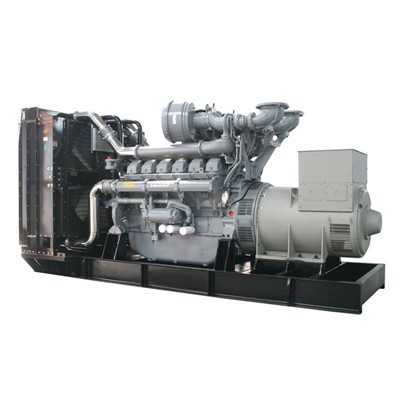
If you’re ready to figure out what works for you, just reach out to us for a chat. We’ll break it down with your specific appliances, no pressure, no sales tricks, just straight answers. Don’t wait until the next big storm hits and you’re scrambling to buy a gen set at the last minute (trust me, prices go up and stock runs out when the weather’s bad). Get ahead of it, do the math right, and you’ll have peace of mind that you’re covered when the grid goes down.
Industrial Diesel Generator Set References:
- U.S. Department of Energy. (2022). Portable Generator Safety and Selection Guide.
- Diesel Technology Forum. (2023). Household Diesel Generator Reliability and Fuel Storage Best Practices.
- Electrical Construction Maintenance. (2021). Understanding Generator Load Calculations for Residential Applications.
- Occupational Safety and Health Administration (OSHA). (2022). Generator Installation and Electrical Load Guidelines.
Jiangsu Kaichen Electric Power Equipment Co., Ltd.
As one of the most professional household diesel generator manufacturers and suppliers in China, we’re featured by quality products and low price. Please rest assured to buy discount household diesel generator in stock here from our factory. If you have any enquiry about customized service, please feel free to email us.
Address: Dinghuo Industrial Park, Jiangdu District, Yangzhou City, Jiangsu Province
E-mail: 19962469616@163.com
WebSite: https://www.kaichenpowertech.com/
