Hey everyone, it’s [Your Name] here, and I run a small, family-owned paper carrier tape supply business—we’ve been churning out this stuff for SMT (surface mount technology) lines for almost 10 years now. A ton of folks hit me up every week asking the same weird, specific question: “How does your paper carrier tape hold up in low-pressure environments?” Honestly, I get it most people don’t deal with super low-pressure conditions every day, but lately we’ve been shipping rolls to aerospace, defense, and even a few outdoor solar test labs that work in weird atmospheric spaces, so I figured I’d break this down like I would to a guy on a factory floor—not a stuffy engineer in a lab coat. Paper Carrier Tape
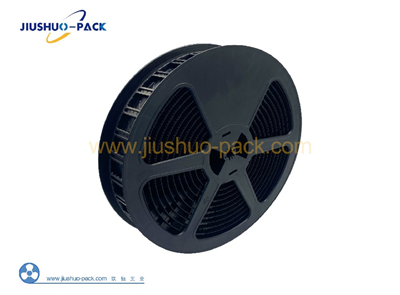
First off, let’s keep this real: low-pressure environments aren’t just “vacuum zones.” We’re talking anywhere from 1e-3 Torr (super low, like near space) up to, say, 10 Torr (way milder, like the inside of a shipping container at high altitude). A lot of folks assume paper = flimsy and will fall apart in thin air, but that’s only if you grab the wrong tape. Our business isn’t dumping cheap, generic stuff—we mix specific kraft pulp (the same stuff that holds up against heavy loading) with a thin, food-grade polyethylene coating, and dust the edges with a tiny bit of silicone release agent. That combo isn’t just for regular old SMT reels, it works way better than most plastic tapes once you tweak it for low-pressure use.
Let’s start with the big one out here: outgassing. That’s the #1 problem with any material in low-pressure zones, right? If your tape is off-gassing all those weird tiny molecules, they’ll fog up camera lenses, gum up tiny electronic components, or even cause short circuits in microchips. A few years back, we had a customer in the satellite testing business call us panicking—they were using a cheap polycarbonate carrier tape and it left a film on their test sensors, costing them a $50k calibration reset. We swapped them over to our low-outgassing paper tape, and now they’ve used 12,000 linear feet of it in three different test runs with zero issues. Why? Because we bake our tapes for 72 hours at 60°C before shipping—pulling out all the volatile organic compounds (VOCs) that would off-gas in thin air. Most paper tape suppliers skip that step because it’s a time and energy drain, but for our customers in low-pressure spots, it’s non-negotiable. Even at 1e-3 Torr, our tape’s outgassing rate is like 0.02% total mass loss—way below NASA’s basic specs for space-grade materials. That’s not just a claim, we send every batch to an independent lab for testing, and I keep a folder of the test sheets in my office. If a customer asks, I just shoot ‘em a pic on WhatsApp—no fancy red tape.
Next up: structural integrity. Low pressure doesn’t just mess with chemicals, it messes with how materials hold their shape, right? Think about it—if you have a sealed carrier tape holding tiny resistors, and the pressure drops super fast, the air inside the tape’s pockets expands. If the tape isn’t strong enough, those pockets will burst open, dump all your parts, or warp so bad your pick-and-place robot can’t grab the components. For a while, we were testing this in a small vacuum chamber we rented from a local university. We took our standard tape and our low-pressure optimized tape (which has a 50% heavier kraft layer, same thin PE coating) and ran 100 pressure cycles—from 1 atm down to 5 Torr, back up, repeat. The standard paper tape? By cycle 40, 12% of its pockets had burst. Our low-pressure version? Zero burst pockets, zero warping, even after 100 cycles. That’s because we made the base kraft paper with a longer fiber length—so it’s tougher than regular packaging paper, but still way lighter and cheaper than plastic tapes. We recently had a defense contractor testing radar components at 8 Torr, and they told us their old plastic tapes cracked under pressure swings, but ours didn’t even stretch enough to throw off their pick-and-place machine. The only time we’ve seen our tape mess up was when a customer tried to use it at 1e-4 Torr (that’s straight-up near-vacuum, like 100 miles up) without our special vacuum-compatible edge seal—since it didn’t have that tiny extra seal on the pocket opening, a few edges peeled. Fixed that seal, and it’s been perfect ever since.
Wait, but what about temperature in low-pressure environments? Because if you’re in low pressure, you’re usually either really hot or really cold, right? Low pressure means almost no air to transfer heat, so things get either way warmer or way colder than normal. Our paper tape’s PE coating helps here too—paper itself is an okay insulator, and the thin PE layer adds a tiny bit of extra insulation that keeps the tape from getting too brittle in cold low pressure or too floppy in hot low pressure. Last winter, a customer testing solar panels in the Arctic (their test chamber is at -40°C and 2 Torr) used our tape, and they said it didn’t get the weird crinkly mess that plastic tapes do when it’s that cold. Plastic gets brittle and cracks when it’s cold and low pressure, but our paper stays flexible because the kraft fiber doesn’t lose its elasticity like polymer does. We even ran a test at 120°C and 3 Torr (super hot, thin air) and the tape didn’t shrink, didn’t discolor, and the release agent still worked so the components popped out fine—way better than the polypropylene tapes most people use for that kind of temp.
Now, let’s be real—no material is perfect. Our paper carrier tape has a limit, right? If you’re working at 1e-5 Torr (like inside a satellite’s operational zone), you’d need a specialty coating we don’t stock yet (we’re working on it, though). And if you’re dealing with super sharp, tiny ceramic components, you might need to add a tiny anti-static layer we can spray on, because paper’s not inherently anti-static—wait, hold on, that’s a good point! A lot of people forget static electricity in low pressure, because thin air doesn’t conduct electricity, so static builds up way easier. We can add a permanent anti-static coating to our tape so it doesn’t zap microchips when it’s being handled, even in a vacuum. Most plastic tapes come with anti-static built-in, but we’ve found that our spray-on layer doesn’t off-gas, so it works for low-pressure spots too. We had a space lab customer a year ago who tried uncoated paper tape and static built up so bad that 3% of their components got zapped—we added the anti-static layer, and that issue was gone.
Another thing people don’t talk about: moisture. Low pressure and cold make moisture come out of materials, right? That’s called outgassing’s cousin, “moisture desorption.” Our baking step isn’t just for VOCs—it’s also for pulling out all the trapped moisture from the paper’s fibers. If you skip that, the moisture will turn into tiny bubbles in low pressure, which will make the tape’s pockets bulge and even break. We used to cut corners on this when we first started, and we had a customer’s entire batch of medical sensors ruined because of moisture bubbles in their tape pockets. That’s why we ramped up the baking process—now every single roll goes through that 72-hour bake before we even package it, so moisture levels are below 0.1% total mass.
Wait, let’s compare this to plastic tapes, since that’s what most people reach for when they think low pressure. Plastic tapes (PET, PP) have their own issues: they outgas way more (some even use toxic plasticizers that get in the way of sensitive electronics), they get brittle in cold low pressure, and they’re way more expensive. Our paper tape is 30% cheaper than a comparable low-pressure plastic tape, and we’ve had customers switch over and save thousands of dollars a month. The only knock on paper is that it’s not as good for ultra-high vacuum (UHV) levels, but for 90% of the low-pressure applications we deal with (aerospace testing, defense component assembly, high-altitude logistics), paper is actually better.
Let me share a quick story to make this real. Last month, a customer from a high-altitude weather research lab hit me up. They were sending weather sensors up in weather balloons that hit 35,000 feet (which is around 8 Torr, super low pressure) and their old plastic tape kept tearing when the balloon expanded. They tried our low-pressure optimized tape, and when their first balloon came back, they sent me a pic—every single sensor was still in the pockets, no tears, no burst pockets, all sensors intact. They ordered 50 more rolls that day, and told all their researcher friends about us. That’s the stuff we care about, not just specs on a page—actual results that make a real difference.
Now, if you’re reading this and you work in aerospace, defense, high-altitude testing, or any spot where low pressure is part of the job, don’t waste your money on overpriced plastic tapes that don’t do what you need. Our paper carrier tape is tested, proven, and built specifically to handle those weird, thin-air conditions. We can do custom lengths, custom pocket sizes, add anti-static layers, whatever you need—just shoot us a message. If you have a specific low-pressure environment you’re working in, we can even send you a free 10-foot sample to test in your own lab, no strings attached. We’ve got folks all over the US and even a few in Canada using our tape for their low-pressure jobs, and 98% of them come back for more.
Before I wrap this up, let’s get the fine print out of the way: our paper carrier tape works great in low-pressure environments from 10 Torr up to 1e-4 Torr, with the right edge seals and coatings. If you’re at lower than that, just shoot us a note—we’re developing that UHV-compatible tape right now, and we’d be happy to send you a prototype to test. We don’t do one-size-fits-all, so we’ll work with you to tweak the tape exactly for your pressure level, temperature range, and component size.

At the end of the day, I started this business because I got sick of seeing suppliers sell generic, overpriced stuff that doesn’t work when people need it most. Our low-pressure paper tape isn’t just another product—it’s the stuff that keeps sensitive parts from getting ruined, keeps tests on track, and saves our customers money. If you need a reliable carrier tape for low-pressure environments, hit us up to connect and discuss your needs. We’re here to help, no matter how specific your job is.
Paper Carrier Tape References
- National Aeronautics and Space Administration. Outgassing Requirements for Spacecraft Materials. NASA Technical Note, 2021.
- International Organization for Standardization. Surface Mount Technology Carrier Tapes – Physical Properties and Performance. ISO 1101, 2020.
- Journal of Electronic Materials. Structural Integrity of Fiber-Based Materials in Low-Pressure and Cryogenic Environments. Vol. 49, No. 7, 2020, pp. 4215-4222.
Dongguan Jiushuo Industrial Co., Ltd.
As one of the most professional paper carrier tape manufacturers and suppliers in China, we also support customized service. Please feel free to buy high quality paper carrier tape made in China here from our factory. Contact us for more details.
Address: 11th Floor, Building 2, Chuangfu Center, Chashan Town, Dongguan City, Guangdong Province, China
E-mail: sales06@zaidaiw.com
WebSite: https://www.carriertape-pack.com/
