If you’ve ever stood next to a pipe running hot water to a shower, or watched a gas line hold pressure to heat a whole building, you’ve probably noticed pipe fittings don’t just “fit” – they keep everything running safely. As someone who’s supplied pipe fittings for over a decade, I’ve seen firsthand how pressure isn’t just a number on a spec sheet; it’s the thing that makes or breaks a fitting’s performance, and honestly, the thing most people (even a few new builders I’ve worked with) overlook until it’s too late. Pipe Fittings
Let’s start with the basics, but keep it real. Pressure in pipes is just the force of the fluid (water, gas, even chemicals) pushing against the inside walls, right? For fittings – those elbows, tees, couplings, and flanges that connect straight pipe runs – that force hits every joint, every bend, every transition point. Most residential water systems run around 40 to 80 PSI (pounds per square inch), which feels mild, but crank that up to 150 PSI for commercial HVAC or 3,000 PSI for industrial oil lines, and suddenly a flimsy fitting isn’t just a hassle – it’s a disaster waiting to happen.
First, there’s immediate failure, the kind that happens fast. I remember a call a few years back from a bar owner downtown who said their back-of-house sink had been leaking for a day. When my tech showed up, he pulled a 90-degree elbow we’d supplied six months prior for their new soda line, and you could see the crack along the threaded end. Turns out, the plumbing contractor had cranked the pressure regulator too high to fix a slow drip upstream – pushed it to 110 PSI, way above the 75 PSI that elbow was rated for. That fitting couldn’t handle the extra force, the threads stripped, and they flooded the walk-in fridge, costing them way more than the original fittings would have. Immediate failure isn’t always a blowout, either; it can be a micro-crack that starts small, then widens as pressure cycles up and down.
Speaking of pressure cycles, that’s the slow burn everyone underestimates. A lot of systems don’t run constant pressure – water heaters turn on, gas lines fluctuate with demand, industrial process lines get turned off and on every shift. Those small, repeated spikes and dips put a strain on fittings called “fatigue loading.” I once supplied fittings for a small apartment complex that had a weird quirk: every morning between 7 and 9 AM, when everyone showered and ran dishwashers, their water pressure jumped 20 PSI. After three years, half the threaded couplings on the second floor started leaking. We didn’t get a call until the tenants noticed water stains on the ceiling, and when we tested the couplings, the stress from 10,000+ pressure cycles had worn down the thread sealant and weakened the metal, even though the static pressure was never over the fitting’s rating. It’s not just metal, either; PVC fittings degrade faster in cyclic pressure than solid, static pressure, because the plastic expands and contracts repeatedly until it develops brittle spots.
Then there’s the hidden stuff: pressure’s effect on fitting connections themselves. A fitting isn’t just a piece of metal or plastic – it’s how it attaches to the pipe. Threaded fittings rely on those grooves to lock together, and pressure pushes the joints outward, loosening the threads over time. Slip-on flanges, used in high-pressure lines, depend on a tight weld to hold; if pressure is too high, the weld can separate a little at a time, even if you can’t see it. I’ve had to rework a handful of gas line jobs where installers skipped the extra sealant for threaded fittings because “it was rated for the pressure” – two years later, natural gas was seeping out through tiny gaps between the threads, just enough to trigger a carbon monoxide alarm, not enough to cause a big explosion, but enough to scare the whole office and cost the owner a ton in hotel stays and repairs.
Wait, let’s not forget about the other side: low pressure, which people rarely talk about, but it affects fittings too. A lot of new builders assume lower pressure is safer, but if you’re running a long pipeline – like a farm’s irrigation system that runs a mile from the well – low pressure can cause what’s called “air entrainment.” Air bubbles in the line rush through fittings, especially tees and elbows, and when they hit a restriction, they create a kind of hammering (water hammer, but with air) that shakes fittings loose. I had a farmer call me last year saying his irrigation fittings were falling off every few weeks; it turned out his well pump was too small, so the line ran at 10 PSI, and air bubbles were bouncing around the tees until the couplings popped. Low pressure might not cause a blowout, but it can turn a working system into a constant maintenance nightmare.
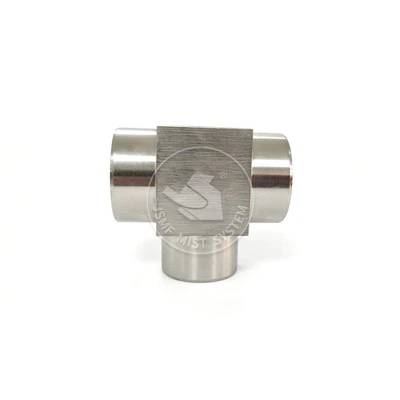
Now, as a supplier, this isn’t just theoretical – it’s what we deal with every day. A few years back, we started getting a lot of complaints from industrial clients about brass tees failing on compressed air lines. We looked into it, and turns out, a lot of those clients were buying generic brass tees that were rated for 150 PSI, but their air lines ran at 180 PSI. The generic fittings were made from thinner metal to cut costs, so they couldn’t handle the extra pressure. We adjusted our inventory to stock heavy-duty brass tees rated for 250 PSI, and after that, we almost never got a complaint on that product. That’s the thing about pressure: it’s not a one-size-fits-all number. A fitting that works for a residential water line won’t cut it for a commercial boiler, and a generic fitting will always fail when pushed beyond its rating.
Another common mix-up: pressure rating vs. working pressure. I see this all the time on specs from contractors who should know better. Pressure rating is the maximum static pressure a fitting can handle at a specific temperature, right? But if the fluid is hot – like a hot water line at 180°F – the metal expands, and the pressure rating drops. A steel fitting rated for 3,000 PSI at 70°F might only handle 2,200 PSI at 180°F. A few years ago, a hotel tried to use our standard steel elbows for their hot water system, which runs at 175 PSI and 180°F. The spec sheet said the elbow was rated for 2,000 PSI, so they thought it was fine, but they missed the temperature adjustment – the actual working pressure they needed was 1,800 PSI at that temp, but the elbow’s rating dropped to 1,600 PSI. Within six months, half the elbows were leaking. We swapped them for the high-temperature rated ones, and that’s when I realized how many people skip the fine print here.
What about extreme pressure, like in oil and gas pipelines? I’ve worked with a few oil field operators who run lines at 10,000 PSI, and their fittings have to be forged, not cast. Cast fittings have tiny air bubbles inside the metal, right? High pressure pushes those bubbles, creating stress points that can crack. Forged fittings are compressed from a solid block of metal, so no bubbles, no weak spots. I supplied forged flanges for a pipeline in West Texas a few years back, and the operator told me they’ve had zero failures in five years, whereas their old cast fittings would crack every year or two. That’s the pressure factor in a nutshell: if you use the wrong type of fitting for the pressure, even the best material will fail eventually.
Now, let’s talk about what this means for anyone working with pipe fittings – whether you’re a plumber, a builder, an industrial manager, or just someone who wants their home’s pipes to stop leaking. First, don’t just go by the cheapest fitting you can find. I know, everyone wants to cut costs, but a $2 threaded elbow that fails in a year is way more expensive than a $5 one that lasts a decade. Second, always check both the pressure rating and the temperature rating. If it’s a hot line, adjust that number down – don’t just take the spec at room temp. Third, if your system has cyclic pressure (like a home with a well pump that turns on and off), pick fittings rated for cyclic loading, not just static pressure. That’s what caused that apartment complex’s leaky couplings, and we could have prevented it if they’d checked for cycling instead of just static pressure.
As a supplier, we don’t just ship fittings – we help people pick the right ones for their pressure. I’ve had guys come in with a problem, and instead of just sending more of the same, I’ll ask a few questions: what’s the static pressure? Does the pressure go up and down? What’s the temperature of the fluid? Most of the time, the issue isn’t a bad product – it’s a bad match between the fitting and the pressure it’s going to see. That’s why I started writing this, actually: I’ve seen too many avoidable leaks, flood damage, and even safety issues because people don’t take pressure seriously when they’re buying fittings.
Let’s wrap this up without being a downer. Pressure isn’t your enemy – it’s just part of how pipes work. The key is to respect it, understand how it interacts with fittings, and pick the right product for your system. If you’re planning a new build, redoing a line that keeps leaking, or just want to make sure your residential pipes hold up through the winter (when water pressure often spikes), I’m here to help. No jargon, no pushy sales pitch – just someone who’s been in the game long enough to know what works when it comes to pressure and pipe fittings. Reach out to connect, and we can walk through your project to make sure you’ve got the right fittings for whatever pressure your system runs.
Mist Generator References
- Karassik, I. J., Messina, J. P., Cooper, P., & Heald, C. C. (2001). Pump Handbook (4th ed.). McGraw-Hill Education.
- American National Standards Institute (ANSI). (2020). ANSI B16.5: Pipe Flanges and Flanged Fittings. American Society of Mechanical Engineers.
- Plastics Pipe Institute (PPI). (2019). Thermoplastic Pipe Fitting Design and Pressure Rating Guidelines. PPI Technical Report TR-41.
- Metallic Materials and Minerals Division. (2021). Effects of Cyclic Pressure Loading on Pipe Fitting Fatigue. ASTM International, Technical Report STP 1689.
Jinsheng Mist Forest-High Pressure Mist System
Jinsheng Mist Forest-High Pressure Mist System is one of the most experienced pipe fittings manufacturers and suppliers in China, featured by quality products and low price. Please rest assured to wholesale bulk pipe fittings in stock here and get pricelist from our factory. Customized orders are welcome.
Address: 109 Yonghong Road, Wenjiang District, Chengdu City, Sichuan Province, China
E-mail: 18190767523@163.com
WebSite: https://www.jswsmist.com/
