Many industries rely on bright steel pipes for their durability and strength. As a supplier of bright steel pipes, I often encounter inquiries about the maximum pressure these pipes can withstand. Understanding this is crucial for applications where pressure resistance is a key factor, such as in plumbing, oil and gas, and construction. In this blog, I’ll delve into the factors that determine the maximum pressure capacity of bright steel pipes and offer insights to help you make informed decisions for your projects. Bright Steel Pipe
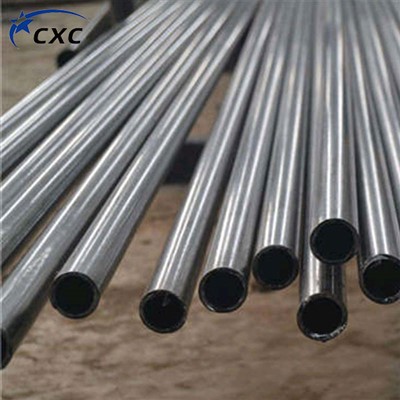
Understanding Bright Steel Pipes
Before we discuss pressure capacity, let’s briefly understand what bright steel pipes are. Bright steel pipes are made from high – quality steel and are often cold – drawn or polished to achieve a smooth, bright surface finish. This not only enhances their aesthetic appeal but also improves their corrosion resistance and mechanical properties. The manufacturing process involves precise control of the steel’s composition and structure, which directly impacts the pipe’s performance under pressure.
Factors Affecting the Maximum Pressure Bright Steel Pipes Can Withstand
Material Composition
The type of steel used in manufacturing bright steel pipes is a primary determinant of their pressure – bearing capacity. Different grades of steel have varying levels of strength and ductility. For instance, pipes made from high – strength low – alloy (HSLA) steels can generally withstand higher pressures than those made from mild steel. HSLA steels contain small amounts of alloying elements such as manganese, vanadium, and niobium, which enhance their strength and toughness.
The carbon content in the steel also plays a significant role. Higher carbon content usually results in increased strength but reduced ductility. A careful balance must be struck to ensure that the pipe can withstand pressure without becoming brittle and prone to cracking.
Pipe Dimensions
The dimensions of the bright steel pipe, including its diameter and wall thickness, have a direct impact on its pressure capacity. According to the hoop stress formula (\sigma=\frac{PD}{2t}), where (\sigma) is the hoop stress (the stress that occurs circumferentially in the pipe), (P) is the internal pressure, (D) is the pipe diameter, and (t) is the wall thickness.
As we can see from the formula, for a given internal pressure, the hoop stress increases with the diameter of the pipe and decreases with the wall thickness. Therefore, pipes with larger diameters require thicker walls to withstand the same pressure as smaller – diameter pipes.
Manufacturing Process
The manufacturing process of bright steel pipes can influence their pressure – resistance. Cold – drawing, for example, can improve the pipe’s internal structure and mechanical properties. During cold – drawing, the steel is deformed at room temperature, which aligns the grain structure of the steel and increases its yield strength.
Heat treatment is another important process. Annealing, quenching, and tempering can be used to modify the microstructure of the steel, enhancing its strength and toughness. A well – executed heat – treatment process can significantly increase the maximum pressure a bright steel pipe can withstand.
End – Use Conditions
The conditions under which the bright steel pipes will be used also affect their pressure capacity. Environmental factors such as temperature and corrosion can reduce the pipe’s strength over time. High temperatures can cause the steel to lose its strength, and corrosive environments can lead to material degradation, reducing the pipe’s wall thickness and thus its pressure – bearing ability.
For example, in offshore oil and gas applications, the pipes are exposed to saltwater, which is highly corrosive. Protective coatings and corrosion – resistant alloys may be required to maintain the pipe’s pressure capacity under such harsh conditions.
Calculating the Maximum Pressure
To calculate the maximum pressure that a bright steel pipe can withstand, we can use the Barlow’s formula, which is derived from the hoop stress formula. For a thin – walled pipe (where the ratio of the diameter to the wall thickness (D/t>20)), Barlow’s formula is given by:
(P=\frac{2St}{D})
where (P) is the maximum pressure, (S) is the allowable stress of the steel, (t) is the wall thickness of the pipe, and (D) is the outside diameter of the pipe.
The allowable stress (S) is determined based on the yield strength of the steel and a safety factor. The safety factor is used to account for uncertainties in material properties, manufacturing processes, and operating conditions. In most engineering applications, safety factors range from 1.5 to 3.
For example, if we have a bright steel pipe with an outside diameter (D = 100) mm, a wall thickness (t=5) mm, and the steel has an allowable stress (S = 200) MPa, we can calculate the maximum pressure as follows:
(P=\frac{2\times200\times5}{100}=20) MPa
Industry Standards and Regulations
When working with bright steel pipes, it’s essential to comply with industry standards and regulations. These standards, such as those set by the American Society for Testing and Materials (ASTM), the American Petroleum Institute (API), and the International Organization for Standardization (ISO), provide guidelines on the material properties, manufacturing processes, and testing methods for steel pipes.
These standards ensure that the pipes can meet the required pressure – bearing capacity and are safe for their intended applications. For example, ASTM A53 is a widely used standard for welded and seamless steel pipes, which specifies the chemical composition, mechanical properties, and testing requirements for different grades of pipes.
Applications and Pressure Requirements
The maximum pressure requirements vary depending on the application of the bright steel pipes.
- Plumbing: In residential and commercial plumbing systems, the pressure requirements are relatively low, typically ranging from 30 – 80 psi (0.2 – 0.6 MPa). Bright steel pipes are commonly used for water supply lines due to their corrosion resistance and durability.
- Oil and Gas: In the oil and gas industry, pipes are often subjected to high pressures. In upstream applications such as well – head and production tubing, pressures can range from several hundred to several thousand psi (a few MPa to tens of MPa). In downstream applications such as refineries and petrochemical plants, pipes may need to withstand high pressures during fluid transfer and processing.
- Construction: In construction, bright steel pipes are used for structural applications such as support columns and frameworks. While the pressure requirements may not be as high as in the oil and gas industry, the pipes still need to have sufficient strength to support the weight and loads of the structure.
Quality Assurance and Testing
As a bright steel pipe supplier, I understand the importance of quality assurance and testing to ensure that our pipes can meet the required pressure capacity. We use a variety of testing methods, including hydrostatic testing, ultrasonic testing, and magnetic particle testing.
Hydrostatic testing is one of the most common methods for testing the pressure capacity of pipes. In this test, the pipe is filled with water and pressurized to a specified level for a certain period. During the test, the pipe is inspected for any leaks or deformations.
Ultrasonic testing and magnetic particle testing are used to detect internal and surface defects in the pipes, such as cracks and inclusions, which can reduce the pipe’s pressure – bearing ability.
Why Choose Our Bright Steel Pipes
Our company is committed to providing high – quality bright steel pipes that can withstand the maximum pressure requirements of your applications. We source our steel from reputable manufacturers and use advanced manufacturing and testing processes to ensure the quality and performance of our pipes.
Our experienced team of engineers and technicians can work with you to select the right pipe material, dimensions, and specifications based on your specific pressure requirements. Whether you’re building a small plumbing system or a large – scale industrial project, we have the expertise and products to meet your needs.
Conclusion

Understanding the maximum pressure that bright steel pipes can withstand is crucial for ensuring the safety and reliability of your projects. By considering factors such as material composition, pipe dimensions, manufacturing process, and end – use conditions, you can select the right bright steel pipes for your applications.
Galvanized Steel Pipe If you’re in need of high – quality bright steel pipes for your next project, I invite you to contact us for procurement and further discussions. Our team is ready to assist you in choosing the best solutions to meet your pressure – related requirements.
References
- ASM Handbook Committee. ASM Handbook Volume 1: Properties and Selection of Irons, Steels, and High – Performance Alloys. ASM International, 1990.
- American Society for Testing and Materials. ASTM A53/A53M – 20 Standard Specification for Pipe, Steel, Black and Hot – Dipped, Zinc – Coated, Welded and Seamless. ASTM International, 2020.
- American Petroleum Institute. API Spec 5L – 46 Specification for Line Pipe. American Petroleum Institute, 2020.
Wuxi Chengxingchuang Metal Products Co., Ltd.
As one of the most professional bright steel pipe manufacturers and suppliers in China, we’re featured by quality products and good price. Please rest assured to buy cheap bright steel pipe for sale here from our factory. Customized orders are welcome.
Address: No. 8-2, Zhoujia Lane, Liangxi District, Wuxi City, Jiangsu Province, China
E-mail: 13961862735@163.com
WebSite: https://www.cxcsteeltube.com/
