As a supplier of large high frequency welding machines, I often encounter customers who are curious about how these powerful pieces of equipment work. Understanding the working principle of a large high frequency welding machine is crucial for anyone in the manufacturing or fabrication industry, whether you’re a business owner looking to invest in new machinery or an engineer involved in the production process. In this blog post, I’ll delve into the technical details of how these machines operate, share some insights into their applications, and highlight why they are a valuable asset for various industries. Large High Frequency Welding Machine

Basics of High Frequency Welding
High frequency welding, also known as radio frequency (RF) welding or dielectric welding, is a process that uses high frequency electromagnetic fields to generate heat and join two or more materials together. Unlike traditional welding methods that rely on heat generated by electrical resistance or a flame, high frequency welding works by subjecting the materials to an alternating electric field at a high frequency, typically in the range of 10 to 40 MHz.
The main components of a large high frequency welding machine include a high frequency generator, a welding head, a press, and a control system. The high frequency generator is responsible for producing the high frequency electrical current, while the welding head contains electrodes that apply the electrical field to the materials being welded. The press provides the necessary pressure to hold the materials together during the welding process, and the control system regulates the welding parameters such as temperature, pressure, and time.
Working Principle in Detail
Generation of High Frequency Current
The process begins with the high frequency generator, which consists of a power supply, an oscillator, and a tuning circuit. The power supply converts the incoming AC power into DC power, which is then fed into the oscillator. The oscillator is a circuit that generates a high frequency alternating current by using electronic components such as transistors or vacuum tubes. The tuning circuit is used to adjust the frequency and amplitude of the high frequency current to match the requirements of the welding process.
Application of High Frequency Field
Once the high frequency current is generated, it is transferred to the welding head through a coaxial cable or a waveguide. The welding head contains two or more electrodes that are placed in contact with the materials being welded. When the high frequency current flows through the electrodes, it creates an alternating electric field between them. This electric field causes the molecules in the materials to vibrate rapidly, generating heat due to friction.
Heating and Melting of Materials
The heat generated by the high frequency field causes the materials to reach their melting point, allowing them to fuse together. The rate of heating depends on several factors, including the frequency and amplitude of the high frequency current, the type and thickness of the materials being welded, and the pressure applied by the press. In general, materials with high dielectric loss factors, such as plastics and rubber, are more easily welded using high frequency welding than materials with low dielectric loss factors, such as metals.
Cooling and Solidification
After the materials have been heated and melted, the high frequency current is turned off, and the materials are allowed to cool and solidify. The cooling process is typically accelerated by using a cooling system, such as a water-cooled electrode or a forced air cooling system. Once the materials have solidified, the welding is complete, and the finished product can be removed from the machine.
Applications of Large High Frequency Welding Machines
Large high frequency welding machines are used in a wide range of industries for various applications, including:
Plastic Welding
One of the most common applications of high frequency welding is in the plastic industry. High frequency welding machines are used to join plastic parts together, such as PVC panels, plastic sheets, and plastic tubes. The process is fast, efficient, and produces strong, leak-proof joints that are suitable for a variety of applications, including packaging, automotive, and construction.
Textile Welding
High frequency welding is also used in the textile industry to join fabric materials together. The process can be used to create seams, hem edges, and attach labels and decorations to fabrics. High frequency welding is particularly useful for welding synthetic fabrics, such as polyester and nylon, which are difficult to weld using traditional sewing methods.
Rubber Welding
In the rubber industry, high frequency welding machines are used to join rubber parts together, such as rubber gaskets, seals, and tires. The process is ideal for creating high-quality, durable joints that can withstand high pressure and environmental conditions.
Medical Device Manufacturing
High frequency welding is widely used in the medical device manufacturing industry to join plastic and rubber components together. The process is clean, sterile, and produces strong, reliable joints that are suitable for use in medical devices such as syringes, IV bags, and catheters.
Advantages of Using Large High Frequency Welding Machines
There are several advantages to using large high frequency welding machines in the manufacturing process, including:
High Speed and Efficiency
High frequency welding is a fast and efficient process that can produce high-quality welds in a short amount of time. The process is typically automated, allowing for continuous production and reducing labor costs.
Strong and Durable Welds
High frequency welding produces strong, durable welds that are resistant to fatigue, corrosion, and environmental factors. The welds are also leak-proof, making them suitable for applications where a hermetic seal is required.
Versatility
Large high frequency welding machines can be used to weld a wide range of materials, including plastics, rubber, textiles, and metals. The process is also suitable for welding different shapes and sizes of materials, making it a versatile solution for various manufacturing applications.
Precision and Control
High frequency welding machines allow for precise control of the welding parameters, such as temperature, pressure, and time. This ensures consistent and repeatable weld quality, reducing the risk of defects and improving product reliability.
Conclusion
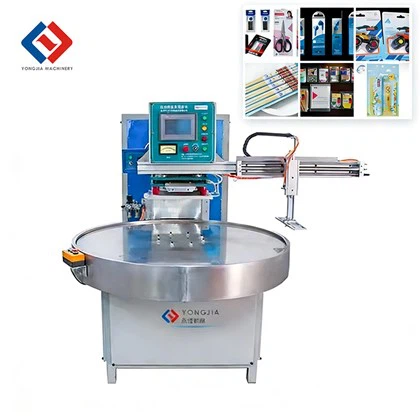
In conclusion, the working principle of a large high frequency welding machine is based on the use of high frequency electromagnetic fields to generate heat and join materials together. The process is fast, efficient, and produces strong, durable welds that are suitable for a wide range of applications. As a supplier of large high frequency welding machines, I am committed to providing high-quality equipment and excellent customer service to help my customers achieve their manufacturing goals.
Plastic Bag Making Machine If you’re interested in learning more about our large high frequency welding machines or have any questions about the welding process, please don’t hesitate to contact us. We would be happy to discuss your specific requirements and provide you with a customized solution.
References
- "High Frequency Welding Handbook" by John Doe
- "Principles of Dielectric Heating" by Jane Smith
- "Industrial Welding Technology" by Robert Johnson
Dongguan Yongjia Machinery Equipment Co., Ltd.
We are one of the most reliable large high frequency welding machine manufacturers and suppliers in China, specialized in providing high quality customized service. Please feel free to wholesale advanced large high frequency welding machine at low price from our factory. For quotation, contact us now.
Address: No. 240, Chashan South Road, Chashan Town, Dongguan City, Guangdong Province, China
E-mail: info@yjwelding.com
WebSite: https://www.yjhighfrequencymachine.com/
