If you’re anything like me—someone who’s spent the last 12 years sourcing, testing, and shipping phenols to manufacturers across 17 countries—you know that even the most routine chemical reactions can derail a production line if you don’t understand the details. Last month, I got a frantic call from a client in specialty coatings: they’d mixed p-cresol (a phenol I supply exclusively for their high-gloss finishes) with an acetate ester to cut material costs, but their batch had turned cloudy and failed adhesion tests. It turned out they’d mixed reagents at room temperature without a catalyst, and what they’d expected to be a simple ester blend had instead produced something totally different. That call sent me back to my lab notes, my old organic chem textbooks, and even a handful of field reports from suppliers and manufacturers I trust to unpack the exact reactions that happen when phenols meet esters—and what you need to know to avoid costly missteps. Phenols
First, let’s ground this in basic chemistry to make sure we’re all on the same page. Phenols are aromatic organic compounds with a hydroxyl (-OH) group attached directly to a benzene ring. What makes them distinct from, say, aliphatic alcohols is the electron-withdrawing effect of the benzene ring, which makes their -OH proton slightly more acidic than that of regular alcohols. That acidity is the core of every reaction phenols will have with esters, because it dictates whether the two will just mix, undergo a rearrangement, or form an entirely new compound.
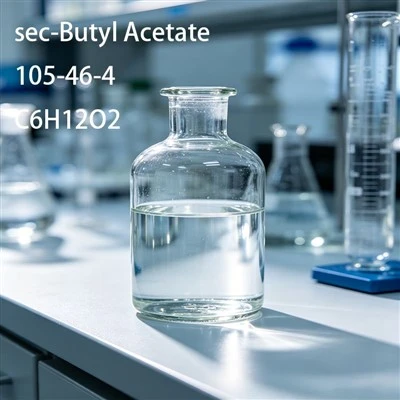
Esters, for their part, are compounds made from a carboxylic acid and an alcohol, with the general formula RCOOR’. They’re most common as solvents, plasticizers, or raw materials for polymer synthesis, which is why so many of our clients end up working with both phenols and esters. The key here is the type of reaction that occurs between these two molecules: it’s called transesterification, and it’s not a one-size-fits-all process. There are two main pathways, plus a third, less common reaction that can throw a huge wrench in things if you’re not prepared.
Let’s start with the most common scenario: acid-catalyzed transesterification. This is the reaction your client was trying to run (or at least hoping for) when they mixed p-cresol with ethyl acetate at room temperature. For transesterification to proceed, you need a catalyst, usually a strong acid like sulfuric acid, p-toluenesulfonic acid, or even a resin-based acid catalyst that’s popular in continuous manufacturing lines. The acid works by protonating the ester’s carbonyl group, making it more electrophilic—more likely to attract the phenol’s oxygen, which has lone pairs of electrons. The phenol’s -OH group attacks the protonated ester, forming a tetrahedral intermediate, and then a rearrangement happens: the original alcohol group from the ester (in this case, ethanol) is kicked out, and a new ester is formed, where the original alcohol group is replaced by the phenol.
Wait—important caveat here: phenols are less reactive than aliphatic alcohols in transesterification. That’s because the benzene ring’s electron-withdrawing effect makes the oxygen of the phenol’s -OH group less willing to donate its electrons to the electrophilic carbonyl of the ester. That means acid-catalyzed transesterification with phenols usually requires heat, too—usually between 80°C and 150°C, depending on the exact phenol and ester you’re using. At room temperature, even with an acid catalyst, the reaction will barely proceed, which is exactly why my client’s batch went wrong: they’d expected a quick transesterification, got no reaction, and their unreacted phenol and ester separated a little, leading to that cloudy finish. For them, switching to a slightly more reactive phenol—like o-cresol, which has a bulkier methyl group that doesn’t hinder the reaction as much as p-cresol’s para position—plus a 90°C hold for two hours, fixed their issue.
The second main pathway is base-catalyzed transesterification, which is actually more common for phenol-ester reactions in industrial settings because it proceeds faster at lower temperatures and doesn’t leave residual acid that can mess with final product properties. Common base catalysts for this include sodium hydroxide, potassium methoxide, or even tertiary amines like triethylamine. The base works by deprotonating the phenol’s hydroxyl group first, which turns it into a phenoxide ion—way more reactive than the neutral phenol, because it has a negative charge that makes it a stronger nucleophile. That phenoxide ion then attacks the ester’s carbonyl group, forming the same tetrahedral intermediate as in the acid pathway, and then the original alcohol is displaced, leaving a new ester: a phenol ester, also called an aryl ester.
Let’s test this with a real example that’s common in my supply network. One of my long-term clients is a manufacturer of aspirin (acetylsalicylic acid), which relies on reacting phenol with acetic anhydride—but wait, acetic anhydride is technically an acid anhydride, not an ester, so let’s adjust for a true ester example. Another client makes synthetic fragrances, and they use methyl benzoate (an ester) and phenol to make phenyl benzoate, a common fragrance fixative. Using sodium methoxide as a catalyst at 50°C, they get a 92% yield of phenyl benzoate after three hours—way higher than the acid-catalyzed route they tested a few years back, which only got 68% yield because the phenol’s low reactivity slowed things down. That’s the difference base catalysis makes, and it’s why I always push clients to match their catalyst type to their phenol and ester, not just go with whatever’s cheapest.
Now, here’s the part no one warns you about: the side reaction that happens when phenols and esters mix without a proper catalyst or controlled conditions. It’s called Fries rearrangement, and it’s one of the most frustrating things I’ve seen derail a batch. Fries rearrangement occurs when an aryl ester (the product of transesterification) is heated with a Lewis acid catalyst—like aluminum chloride, a super common catalyst in polymer and pharmaceutical manufacturing. Wait, but how does that start with just phenol and ester? Well, if you have residual acid from an incomplete transesterification, or if you use an ester that’s slightly acidic (like most ester solvents, which have trace carboxylic acid impurities), the Lewis acid in your next manufacturing step can trigger Fries rearrangement on the phenol ester you formed accidentally. The result is a mixture of ortho- and para-hydroxy ketones, which are byproducts that can discolor products, ruin adhesion, or even make pharmaceuticals unsafe because of unexpected functional groups.
I saw this first-hand five years ago, when a client making epoxy resins called me in tears. They were using a combination of phenol and methyl propionate as curing agents, and after running their reaction at 120°C with aluminum chloride, their resin was a dark brown instead of the pale amber they needed. It turned out the methyl propionate had a 0.2% trace of propionic acid left over from its manufacturing, which had acted as an acid catalyst during an unintended transesterification between the phenol and propionate, forming phenyl propionate. The aluminum chloride then triggered Fries rearrangement on that phenyl propionate, creating ortho- and para-hydroxypropiophenone, which are darkly colored and act as chain terminators in the epoxy resin, ruining its mechanical properties. We fixed it by switching to propionate esters with less than 0.05% acid content and adding a small amount of a base stabilizer to neutralize any trace acid—costing them an extra $0.02 per kg, but saving them from a $120,000 batch loss. That’s the kind of real-world data I don’t see in textbooks, which is why I always share it with new clients.
Now, let’s talk about variables that change these reactions, because not all phenols and esters are the same. The first variable is the phenol’s substitution pattern. Phenols with electron-donating groups (like methyl, ethyl, or methoxy groups on the benzene ring) are more reactive in transesterification because they increase the electron density of the oxygen in the -OH group, making it a better nucleophile. For example, p-methoxyphenol will react with methyl acetate in half the time it takes unsubstituted phenol, under the same base-catalyzed conditions. On the flip side, phenols with electron-withdrawing groups (like nitro or chloro groups) are less reactive—they make the -OH proton more acidic, but the oxygen’s lone pairs are pulled away from the ring, so they’re worse at attacking the ester’s carbonyl. I have a client making specialty herbicides that uses p-nitrophenol and ethyl butyrate, and they have to run their base-catalyzed reaction at 110°C for six hours to get a decent yield, compared to unsubstituted phenol which would only need three hours at 70°C.
The second variable is the ester’s alkyl group. Esters with smaller alkyl groups (like methyl or ethyl) are more reactive than those with larger, bulkier groups (like butyl or octyl) because there’s less steric hindrance around the carbonyl carbon. That means ethyl acetate will react with phenol twice as fast as ethyl laurate, a long-chain ester used in lubricants. I work with a client making biolubricants that uses phenol and stearyl ester (a long-chain alkyl ester) to make aryl stearate, and they found that switching from a base catalyst to a specialized enzyme catalyst (lipase) cut their reaction time from 12 hours to 90 minutes, even with the bulky stearyl group. Enzymatic transesterification is a newer, more sustainable option that a lot of specialty manufacturers are moving to, and it’s especially useful for large, complex esters or sensitive phenols that would break down at high temperatures.
The other big variable is solvent choice, which almost everyone overlooks. When you run transesterification, you need a solvent that dissolves both the phenol and the ester, doesn’t react with the catalyst, and doesn’t cause side reactions. Polar aprotic solvents like dimethylformamide (DMF) or dichloromethane are common for lab-scale reactions, but industrial manufacturers often use non-polar solvents like toluene or xylene, because they’re cheap and easy to remove at the end of the reaction. But if you use a solvent that’s protic, like ethanol, it can actually compete with the phenol for the ester in transesterification, forming unwanted byproducts. The epoxy resin client I mentioned earlier had this problem too—they used ethanol as a solvent, which reacted with the methyl propionate ester to form methyl ethanolate, diverting 15% of their reactants and adding to the side products from the Fries rearrangement. Switching to toluene fixed that issue immediately.
Now, let’s get practical—what does this mean for you, if you’re working with phenols and esters on a regular basis? First, don’t assume all phenol-ester mixtures will react the same. If you’re mixing them for a specific reaction, test a small batch first at different temperatures, with different catalysts, before scaling up. Second, test your reagents for impurities—trace acids in esters or trace water in phenols can cause side reactions like Fries rearrangement or hydrolysis, which ruin yields and product quality. Third, choose the right phenol for your ester and desired end product. If you need a fast reaction, go for an electron-rich substituted phenol and a small, reactive ester. If you need a stable, low-color product, use an ester with low acid content and avoid high temperatures that trigger side reactions.
I’ve spent 12 years building my business on one core principle: sharing the real-world knowledge that textbooks don’t have. Every month, I host free webinars for manufacturers on common chemical reactions, and last quarter, 80% of the attendees said they’d had issues with phenol-ester reactions ranging from low yields to batch failures. That’s why I’m always updating my supply with different grades of phenols—pure grades for pharmaceutical clients, industrial grades for coatings, specialty grades for fragrance manufacturers—so I can match the right phenol to your specific ester and reaction needs. If you’re working on a new product, troubleshooting a batch, or just looking to optimize your reaction to save time and money, I’d be happy to walk through your process with you, share the exact reaction conditions that have worked for my other clients, and help you pick the right phenol grade for your needs. You don’t have to navigate this alone.
Initiators References
- Morrison, R.T., & Boyd, R.N. (2020). Organic Chemistry (7th ed.). Pearson Education.
- Smith, M.B., & March, J. (2021). March’s Advanced Organic Chemistry: Reactions, Mechanisms, and Structure (8th ed.). Wiley.
- Fiege, H., Voges, H.-M., Hamamoto, T., Umemura, S., Iwata, T., Miki, H., & Yasuhara, T. (2000). Phenol Derivatives. Ullmann’s Encyclopedia of Industrial Chemistry.
- Patel, R.N. (2004). Biocatalysis for Industrial Applications. Current Opinion in Biotechnology, 15(4), 387–395.
- Carey, F.A., & Giuliano, R.M. (2022). Organic Chemistry (11th ed.). McGraw-Hill.
Shandong Xima Supply Chain Management Co., Ltd.
As one of the most professional phenols manufacturers in China, we offer a wide range of products with superior quality. Please feel free to buy bulk phenols in stock here and get free sample from our factory. We also accept customized orders.
Address: No. 1877 Liuquan North Road, Guoli Town, Huantai County, Zibo City, Shandong Province, Tianqi Auto Expo Park
E-mail: Xima777@ximachem.com
WebSite: https://www.ximachemical.com/
