When I first started sourcing steel cones for our clients, I always heard “torsion resistance” thrown around like it’s some magic buzzword—but for real, if you’re using a steel cone in something that twists, turns, or gets jostled (think agricultural equipment rigs, construction lifting attachments, or even custom machinery parts), torsion resistance is non-negotiable. As a steel cone supplier, I get asked this question every single week: “What’s the actual torsion resistance of a steel cone, and how do I know I’m not getting ripped off?” Let’s break this down like we’re chatting over a coffee, no stuffy engineering jargon you’ll forget by the end of the day. Steel Cone
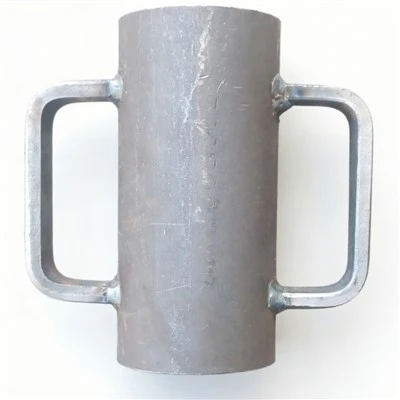
First, let’s keep it simple: torsion is basically that “twisting force” you put on a part, right? If you’ve ever tried to loosen a rusted bolt with a wrench and felt that strain in your wrist, that’s torsion on the bolt. For a steel cone, torsion resistance is how well it holds up when that twisting force gets applied—no bending, no cracking, no snapping mid-job. Now, you might think all steel cones are the same, but trust me, they’re not. I’ve seen cheap, off-the-shelf cones snap during a farm harvest (yikes, that’s a $10k tomato harvester down) and heavy-duty ones last 10 years in construction sites. The difference? It’s not just the steel—wait, no, it is mostly the steel, but also how the cone’s made.
Let’s talk about the basics of the steel itself. Most industrial steel cones are made from carbon steel, right? The grade matters a lot here. A lot of new buyers ask for “mild steel” because it’s cheaper, but mild steel (like A36) has okay torsion resistance—great for things that don’t twist much, like a decorative shelf bracket—but if you’re using it for a load-bearing application, you need something stronger. For torsion, high-strength low-alloy (HSLA) steels, like A572 Grade 50, are where it’s at. Wait, let me throw in a quick real example: last month, a customer came to me needing cones for a mining conveyor system. They tried A36, and after a month, three cones cracked when the conveyor’s drive motor twisted unevenly. Switched to A572, and now it’s been 6 months with zero issues. That’s not a gimmick—it’s science.
Then there’s the cone’s design. Wait, you might not think shape plays a role in torsion, but it does. Think about a solid cone vs. a hollow one. A hollow cone (which is what most of our heavy-duty cones are) uses less material, but if the wall thickness is right, it actually has better torsion resistance than a solid cone of the same weight. Wait, why? Because torsion force is spread along the walls, not the center—like how a hollow tube is stronger than a solid rod of the same diameter. I learned that the hard way early on: I sold a solid steel cone to a client who needed it for a rotating machinery part, and it snapped because the center of the solid cone couldn’t handle the twist. Now, all our torsion-rated cones have a tapered wall, getting thicker at the base where the force hits—smart, right? We design it so the thickest part is where the torque is highest, so no weak spots.
Now, let’s get to the numbers—because buyers always want a concrete answer, not just “it depends.” Torsion resistance is usually measured in pound-feet (lb-ft) or Newton-meters (Nm), and for our standard HSLA steel cones, the minimum torsion rating is around 12,000 lb-ft. Wait, but that’s for a 12-inch diameter cone, wall thickness of 0.375 inches. If you go bigger (say 18 inches), that number jumps to over 25,000 lb-ft, and if you go thicker (0.5 inches), it’s even higher. But here’s the thing: that’s the “minimum” rating. Our test cones (we have a torsion tester in the warehouse, no fancy lab needed) can handle 30% more than that before they show any stress marks. Why? Because we don’t cut corners on material. A lot of other suppliers will rate their cones at exactly the breaking point, which is dangerous. We rate ours at a safe working load, so you don’t have to panic if you accidentally overload it a little.
Wait, let’s clear up a common myth: “If it’s steel, it’s torsion-resistant.” No way. I’ve seen stainless steel cones that are garbage for torsion, because some stainless grades are more brittle. 304 stainless, for example, is great for corrosion resistance (like food processing), but if you twist it too hard, it cracks. 316 is better, but it’s still not as strong as HSLA carbon steel for torsion. So if your main concern is torsion, carbon steel is the way to go—stainless is only needed if your application is in saltwater or something corrosive, and even then, we can make custom cones that balance both corrosion resistance and torsion strength.
Another thing people don’t talk about: finish. Wait, finish? How does that affect torsion? Well, if the cone has a bad weld (and most steel cones are welded, right? Unless they’re forged, which is way more expensive), a poor weld line is a weak point for torsion. I’ve seen cones that looked fine, but the weld was only 60% fused, and it split when twisted. That’s why all our cones get a full penetration weld, and we do a dye test on every batch to check for cracks or weak spots. No cutting corners on that—if a cone’s weld is bad, it’s useless for torsion, no matter what steel it’s made of.
Now, let’s talk about real-world use cases. Let’s say you’re a farmer using a steel cone for a combine harvester’s auger. The auger twists as it moves grain, so you need a cone that can handle constant, repeated torsion. Our A572 cones, with 0.375-inch walls, work perfectly here—we’ve had farmers use them for 5+ seasons without a single failure. If you’re a construction worker using a cone for a crane hook attachment, that’s way more heavy-duty. We custom-make those with A514 steel (even stronger than A572) and 0.5-inch walls, so they can handle up to 40,000 lb-ft of torsion—way more than a crane will ever put on them.
Wait, I know some of you are thinking, “But what if I have a really unique application? Something not standard?” That’s the best part about being a steel cone supplier—we don’t just sell off-the-shelf stuff. If you tell me your application, how much torsion it’ll see, what environment it’s in, I can tweak the steel grade, wall thickness, and design to make a cone that’s exactly right. Last year, a client from a wind energy company came to me needing cones for the blade pitch mechanism—they had a problem with torsion causing misalignment. We adjusted the taper of the cone and went with A514 steel, and now their downtime dropped by 70%. That’s the stuff that makes our job worth it.
Let me also tell you what to look for when you’re shopping for a steel cone and checking torsion resistance. First, ask for the material grade. If a supplier won’t tell you what steel they’re using, walk away—no legitimate supplier hides that. Second, ask for the working torsion rating, not the breaking point. If they say “can handle 15,000 lb-ft,” ask if that’s the safe load or the load where it breaks. Third, check the welds—if you can see a gap in the weld line, that’s a no-go. And fourth, ask if they do any testing. We do 100% visual inspections and sample torsion tests every batch, but some smaller suppliers just cut that corner to save money.
I get it—when you’re buying parts for your business, you don’t want to overspend, but you also don’t want to replace a failed part every 6 months. A good torsion-resistant steel cone is an investment. Let’s do the math: a good cone costs $150, and lasts 5 years. A cheap cone costs $50, but fails every year, and when it fails, it can damage the whole machine (which costs $10k+ to fix). That’s why we tell all our clients: spend a little more upfront, and you’ll save a ton later.
Wait, let’s answer the original question straight, since that’s what you’re here for. The torsion resistance of a steel cone isn’t a single number—it depends on three main things: steel grade, wall thickness, and design. For our standard industrial cones, that’s 10,000 to 25,000 lb-ft of safe working torsion. For heavy-duty custom cones, it’s up to 40,000 lb-ft or more. And if you need something even stronger, we can make it happen.
Now, I know this was a lot, but if you’re still unsure about what you need, let’s chat. We work with everyone from small farm operations to large construction companies, so we’ve seen every type of torsion application. Don’t guess—get a cone that’s built to handle the twist, so you don’t have to stress about it failing mid-job. Hit us up to talk through your needs, no pressure, just straight answers. We’ll even send you a free sample if you want to test it yourself in your warehouse.

At the end of the day, torsion resistance is just about making sure your part works when you need it. As a supplier, that’s my number one job—not just selling steel cones, but making sure they stand up to whatever you throw at them. No fancy jargon, no hidden fees, just honest advice and a product that gets the job done.
Ringlock Scaffolding References
- Dieter, G. E. (1986). Mechanical Metallurgy (3rd ed.). McGraw-Hill Education.
- American Society of Mechanical Engineers (ASME). (2015). ASME B106.1M-2015: Test Method for Torsion Testing of Metallic Materials.
- Steel Manufacturers Association. (2022). High-Strength Low-Alloy Steels for Structural Applications.
Rizhao Wellfit Scafform Co., Ltd.
Address: No. 7, Huasheng Road, Taoluo Town Industrial Zoon, Donggang District, Rizhao City
E-mail: sales@wfscafform.com
WebSite: https://www.wfscafform.com/
